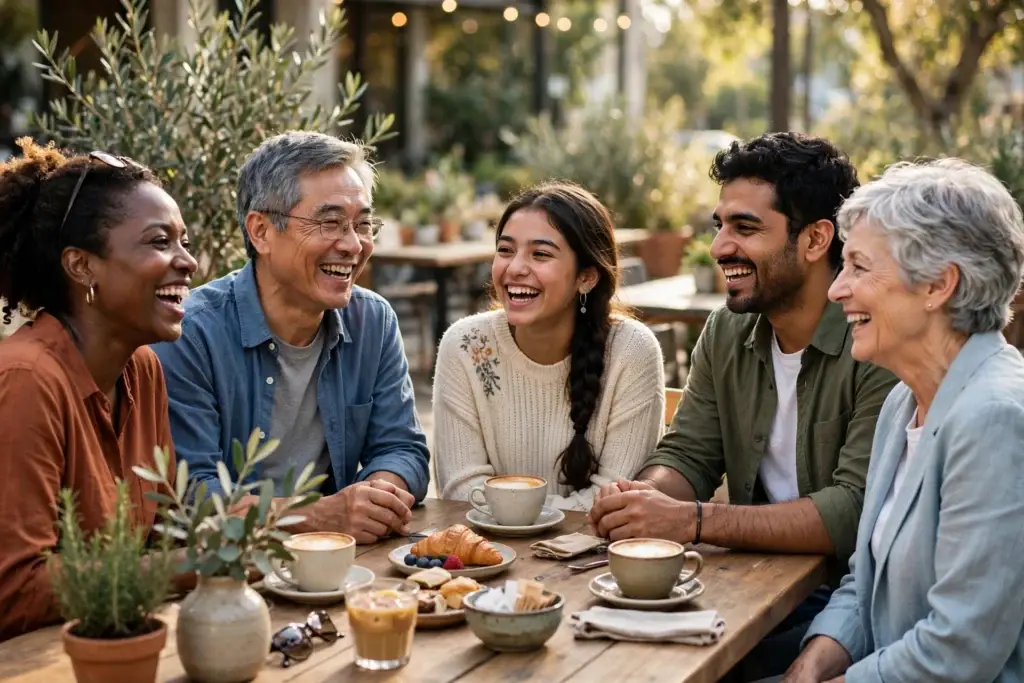
We were not put on this earth to do life alone.
We were put here to build relationships, to share our talents with others, and to help others. That is not just a nice idea. It is how we stay healthy — in our minds, in our emotions, and in our bodies.
Loneliness is very unhealthy for people. It puts a lot of stress on a person — stress on the heart, stress on the mind, stress on the whole body. When we are cut off from others for a long time, we do not just feel sad. Our health suffers.
The numbers make it plain:
- The U.S. Surgeon General’s 2023 advisory, Our Epidemic of Loneliness and Isolation, reported that about one in two American adults had experienced loneliness, and that lacking social connection carries a risk of premature death comparable to smoking up to 15 cigarettes a day.
- That same body of research links poor social connection to a 29% higher risk of heart disease, a 32% higher risk of stroke, and, in older adults, about a 50% higher risk of developing dementia.
- In a large pooling of studies, loneliness was linked to a 26% higher likelihood of early death, social isolation to 29%.
- A 2023 survey across 142 countries found roughly one in four people aged 15 and older felt very or fairly lonely.
- The World Health Organization’s Commission on Social Connection reported in June 2025 that about one in six people worldwide experiences loneliness, and that loneliness and social isolation together are linked to an estimated 871,000 deaths a year — roughly 100 every hour.
- A 2024 University of Michigan poll found 33% of adults aged 50 to 80 felt lonely some of the time or often in the previous year.
These are associations found across many studies, not a promise about any one person. But together they say the same thing Jeff has said in the counselling room for 40-plus years: we need others.
Think of a baseball team. Everybody has strengths. You have somebody who is good at the fast balls, the fast hits that come at third base. You have somebody who can pitch — and that is what they can do, they know how to pitch, they have an arm that allows them to throw at really high speeds. You have somebody who can catch, somebody who can run, somebody who can hit.
Nobody on that team can do it all alone. Together, everybody makes a team, with all the different parts moving. That is how life works too. Your talent is not meant to sit by itself. It is meant to fit with other people’s talents, so that together you can do something none of you could do alone.
“Alone we can do so little; together we can do so much.” — Helen Keller
We get a lot of mental and emotional stimulation by being around others. Conversation, laughter, listening, helping, being helped — all of it wakes our brains up. It keeps our brains active. And that matters throughout life. Staying connected to people is one of the ways we keep our brains growing, not shrinking back.
One of the benefits of working is that you get a chance to be with other people. That could be paid work. It could be a business. It could be volunteer work, or serving customers. We might complain about these things sometimes. Sometimes it is hard. Sometimes we have difficulty with the people we work with.
But the benefits of working with others are massive — for our psychological development, for stimulating our brains, for keeping our brains active. Even on a hard day at work, you have talked, listened, solved a problem with someone, and been part of something bigger than yourself. That counts. That helps.
So here is a small step for this week: reach out to one person. Have a coffee. Make a call. Volunteer for an hour. Join a group. Show up where people are.
You do not have to be the best player on the team. You just have to show up, bring the strength you have, and let others bring theirs.
We grow together. We heal together. We were made for each other.
Sources: U.S. Surgeon General’s Advisory, Our Epidemic of Loneliness and Isolation (2023); Holt-Lunstad et al. meta-analyses; Meta-Gallup survey (2023, 142 countries); WHO Commission on Social Connection report (June 2025); University of Michigan National Poll on Healthy Aging (2024). Figures are research associations, not medical advice for any individual.
This post is general information and encouragement only. It is not medical advice, and it is not a substitute for professional help. If you are struggling, please reach out to someone you trust, to your doctor, or to a crisis line — in Canada, call or text 988.
Framework Counselling, Timmins, Ontario — 705-406-3430, counsellorjeff@gmail.com. Monday–Friday 10:00 a.m.–6:00 p.m., Saturday 1:00–5:00 p.m. Free parking available.